
Kauaʻi County Sex Offender Checks
The official starting point for a Kauaʻi County search is the Hawaiʻi Sex Offender and Other Covered Offender Search. HCJDC runs this statewide system under HRS chapter 846E. It includes people who meet the law's definitions for sex offenders and certain other offenders against minors. KPD performs the local registration function, but research found no separate county registry that should replace the state portal.
Begin broadly with the island set to Kauai, then narrow by name, street, city, or ZIP code. Compare more than one identifier because people can share names and an address can change. The official warning matters: registry publication reflects a qualifying conviction and statutory registration duty. It is not a county-created risk score or a finding that one listed person poses more danger than another.
Choosing Kauaʻi Registry Search Fields
Each official search mode answers a different question. A name search works when the person is known, though aliases and spelling differences can affect results. Street and ZIP searches support location-based awareness. City labels can be imperfect on Kauaʻi because postal localities and census-designated places overlap. The island filter is the cleanest countywide starting point and also keeps Niʻihau within the wider county context.
Use the fewest assumptions possible. Search a surname first, try a known alias if appropriate, and inspect the public profile before deciding two records refer to the same person. For an area search, try street name, city, and ZIP separately. A missing result does not prove that no registration duty exists or that every update has reached the public display.
Kauaʻi Covered Offender Searches
HCJDC's official portal opens with “Start a Search” and conditions of use. The search is free, and HCJDC lists a free covered-offender record printout among its services. Follow the conditions, keep the Kauaʻi geography in view, and read the full record rather than relying on a result-list label.
- Open the official covered-offender portal, choose “Start a Search,” and review its use terms.
- Select Kauai under island, then add a name, street, city, or ZIP only as needed.
- Review the result list and compare the photograph, aliases, physical details, and locality.
- Open the profile and read the offense, court, address, and registration-status information together.
| Field Label | Type | Required | Notes |
|---|---|---|---|
| Name | Text | No | Aliases may appear on the full profile. |
| Street name | Text | No | Use a street name without assuming a house number is required. |
| City | Text or select | No | Postal localities and CDP names may overlap. |
| Island | Select | No | Choose Kauai for the broad island search. |
| ZIP code | Text | No | Searches a five-digit ZIP area. |
| Alerts | Link or action | No | Requires a myHawaii or eHawaii login. |
Kauaʻi Alerts Through myHawaii
The registry offers email alerts through an eHawaii.gov or myHawaii single-sign-on account. After signing in, a user can set a monitored area and receive notice when a registrant moves into it or updates information. This is a notification aid, not a substitute for checking a current profile when a specific safety question arises.
Alerts are most useful when the saved geography is precise and the account email stays current. Read the linked profile after an alert rather than drawing conclusions from the email subject. A move notice reports a registry update; it does not state that a crime occurred, and it does not authorize contact with the listed person or household.
Kauaʻi Registry Profiles: What They Show
A public Kauaʻi County profile combines identifiers, covered-offense information, and registration data authorized for disclosure. Fields vary by record, so a blank area should not be filled by guesswork. The portal may display map or update information, but it warns that a residence or status may not be current and does not guarantee completeness.
| Name & Aliases | Published identity names and known aliases within the public dataset. |
|---|---|
| Photo & Physical Description | A registry photograph and descriptive traits used to distinguish people. |
| Registered Address | Residence or location information authorized for public disclosure. |
| Offense & Court | Covered-offense description, jurisdiction, conviction, and court information. |
| Other Public Details | Vehicle, work, school, or distinguishing information when part of the lawful public dataset. |
| Registration Status | Compliance, status, verification, or profile-update information when displayed. |
HCJDC Corrects Kauaʻi Registry Data
A shared name, outdated address, or apparent gap should be reported to the agency that maintains the database. The HCJDC Sex Offender Registry Unit accepts questions about inaccurate information and possibly unregistered offenders at 808-587-3350 or through its official contact form. Its office is at 465 South King Street, Room 102, Honolulu, HI 96813.
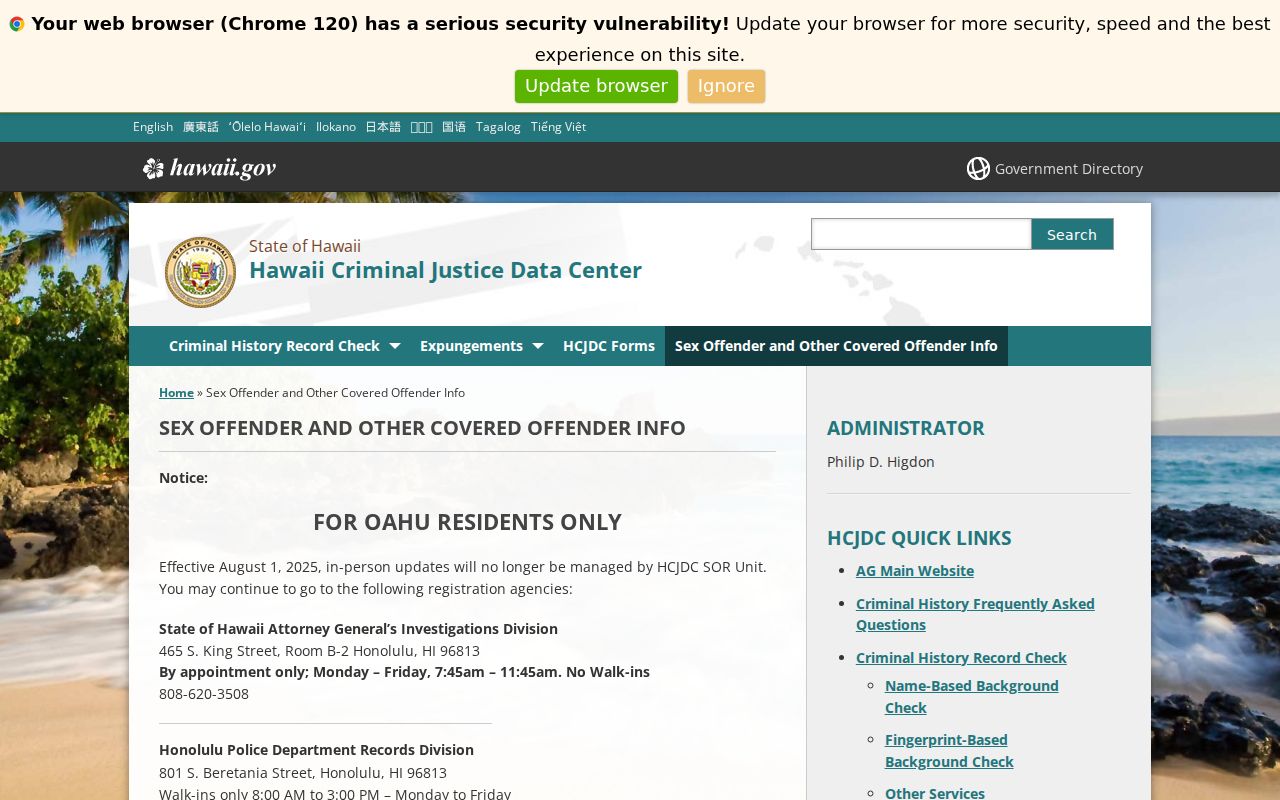
The agency page identifies the state unit responsible for covered-offender information, making it the right correction channel rather than an unofficial listing service. For routine local police contact, KPD publishes 808-241-1711; immediate danger belongs with 911.
Kauaʻi Offender Registration Duties
Hawaiʻi applies chapter 846E categories and federal-style tier concepts, but the statute and court record control each person's duty. Registration generally must occur no later than three working days after the earliest applicable trigger, including arrival in Hawaiʻi, release, conviction without incarceration, probation, parole, or arrival on an island where the person will remain beyond the statutory period.
| Framework | General Duration | Important Limit |
|---|---|---|
| Tier I | Typically a 15-year framework | Current statute, offense, and relief rules must be checked. |
| Tier II | Typically a 25-year framework | The tier is not a personalized risk score. |
| Tier III | Typically a lifetime framework | The court and statute control the actual duty. |
| Other covered offender | Depends on chapter 846E | Listings do not all arise from the same offense type. |
The official HRS chapter 846E index links the definitions, registration procedure, verification, public-access, failure-to-comply, termination, and internet-publication provisions.
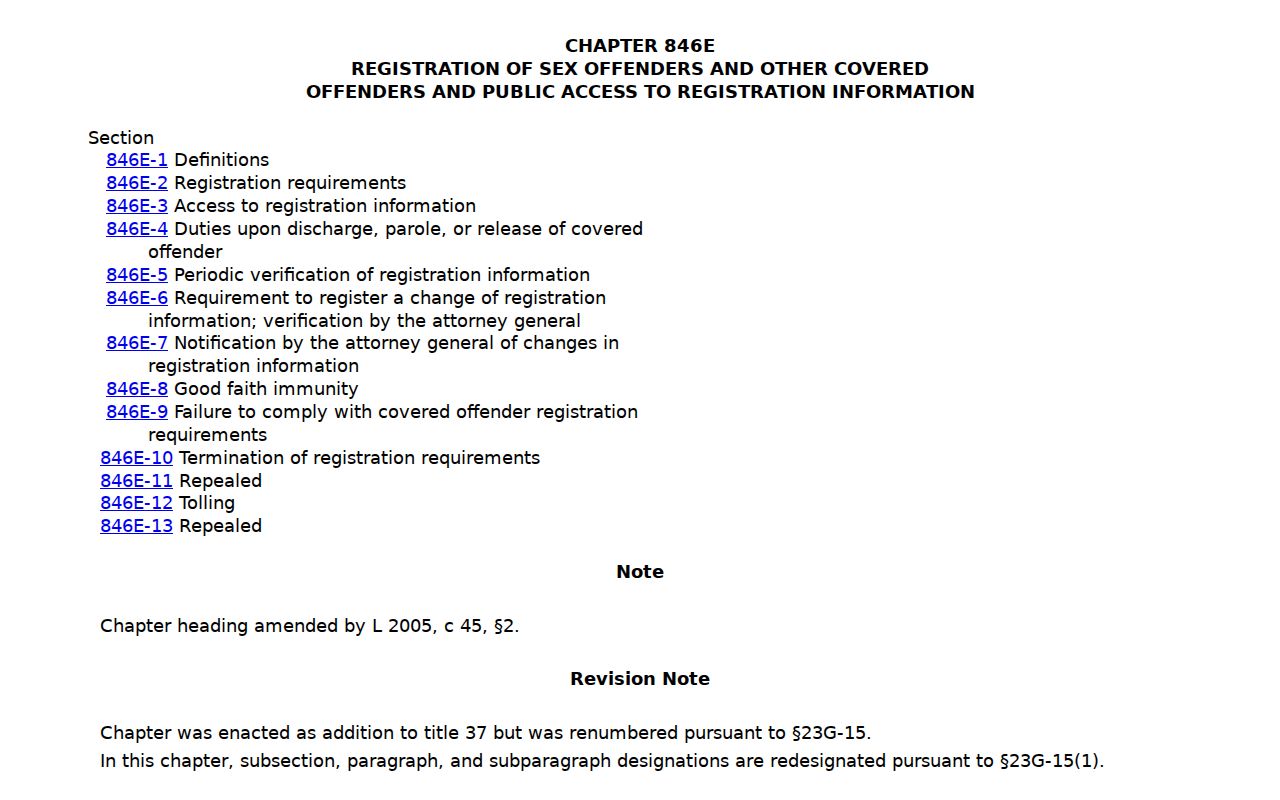
The statutory index is the proper place to verify a current duty because general tier descriptions cannot decide an individual case.
KPD’s Kauaʻi Registration Window
KPD handles in-person Kauaʻi registration at the Records Section walk-up window, 3990 Kaʻana Street, Suite 200, Līhuʻe, HI 96766. The Records Clerk line is 808-241-1929 and the supervisor line is 808-241-1660. Hours changed temporarily during July and August 2026, so callers should confirm the current schedule before traveling.
The local counter serves the registration process, while HCJDC administers the central public registry. Those roles should not be confused. KPD’s department page establishes the county agency, and its contact directory provides current local lines. A public searcher should still use the state portal for published profiles and the HCJDC unit for a database correction.
Kauaʻi Visitor Registration Deadlines
Hawaiʻi's registration rules can apply to a visitor as well as a permanent resident. Research from the official registry FAQ identifies two time measures: presence for more than ten days, or an aggregate of thirty days in a calendar year. A person covered by chapter 846E should not assume that a hotel stay, temporary work site, family visit, or repeated short trip falls outside the law merely because the person's main home is elsewhere.
The three-working-day clock in HRS §846E-3 is also tied to several events. It can begin after arrival in Hawaiʻi, release from incarceration or commitment, a qualifying conviction when the person is not incarcerated, release on probation, placement on parole, or arrival on an island where the person resides or expects to remain beyond the statutory limit. Because the earliest applicable trigger controls, waiting for the tenth day before asking KPD may be too late in a particular case.
Anyone uncertain about an individual registration duty should contact KPD or the HCJDC Registry Unit before the deadline rather than rely on a broad summary. Public searchers should use this timeline only to understand why a new or visiting person's profile may be in transition. It does not establish that a person has violated the law. Failure-to-comply questions require official investigation, current facts, and the provisions of HRS §846E-9.
NSOPW Extends a Kauaʻi Registry Search
Kauaʻi County residents sometimes need to check beyond Hawaiʻi, especially when a person recently arrived from another state. The U.S. Department of Justice National Sex Offender Public Website is the official nationwide supplement. It brings participating jurisdictions into one search, while the Hawaiʻi portal remains the best source for Hawaiʻi-specific fields and local updates.
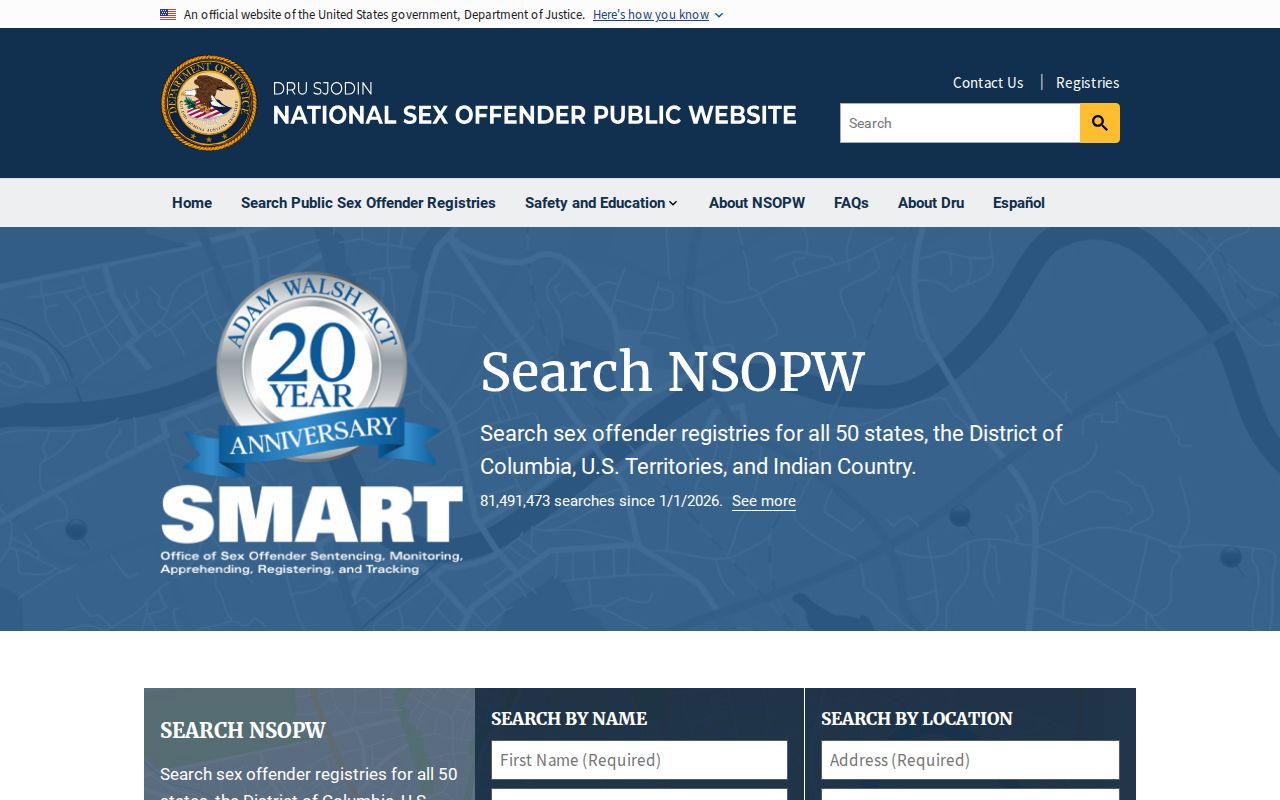
The national interface broadens geographic coverage but does not replace reading the originating jurisdiction's profile or contacting HCJDC about Kauaʻi data. Search both layers when a move across state lines is relevant.
Using Kauaʻi Registry Information Lawfully
The registry exists for public awareness and informed safety planning. Use it to understand official published facts, set area alerts, and decide when to contact law enforcement. Do not confront a registrant, publicize assumptions, or treat family and household members as listed people. Verify urgent facts through KPD or HCJDC because the portal warns that information may lag.
Misuse can bring penalties: Registry terms warn that using information to injure, harass, or commit a crime may lead to criminal prosecution, civil liability, or both under Hawaiʻi law.
A lawful response stays proportionate: confirm the profile, use alerts for updates, report inaccurate data to HCJDC, and call 911 only for an immediate threat. HRS §846E-5 and §846E-11 govern public access and internet publication, while §846E-9 addresses failure to comply. None of those provisions turns a public listing into permission for vigilantism.