
Līhuʻe Criminal History Checks
Use the office tied to the record. Līhuʻe offers in-person access that other Kauaʻi communities lack, yet no single counter produces every criminal record. A police narrative, court docket, custody entry, and eCrim conviction product serve distinct purposes.
- Ask KPD Records for a police report using the report number, incident date and type, contact details, and ID.
- Search eCourt Kōkua by name or case ID and choose Fifth Circuit context.
- Use the public terminal or criminal counter at Puʻuhonua Kaulike for older or offline court material.
- Check current custody through Hawaiʻi SAVIN/VINE or call KCCC at 808-241-3050.
- Use eCrim for public adult Hawaiʻi conviction information; use fingerprint-based HCJDC Access & Review to inspect your own identity-linked record.
Compare identifiers and dates. A report number will not work as a court case ID, and a blank eCrim search does not rule out a pending case.
Līhuʻe Records on Kaʻana Street
Three distinct record makers sit within one block. KPD Headquarters and Records occupy 3990 Kaʻana Street, Suite 200. The Office of the Prosecuting Attorney is in Suite 210. Across the street, Puʻuhonua Kaulike at 3970 Kaʻana Street houses Fifth Circuit court functions.
| Office | Record | Public route |
|---|---|---|
| KPD Records | Incident and arrest reports | Online request, 808-241-1929, scheduled pickup |
| Prosecuting Attorney | Charging and prosecution file | Office at Suite 210; protected work product may not be public |
| Fifth Circuit | Filed case and disposition | eCourt Kōkua, terminal, or clerk request |
Physical closeness does not merge the records. Ask each custodian only for the file it maintains.
Records at the Līhuʻe Police Department
There is no separate Līhuʻe Police Department. The countywide Kauaʻi Police Department serves the community, and its headquarters doubles as the Līhuʻe station. The official district page says the patrol corridor extends from Maluhia Tree Tunnel to Kukui Street in Kapaʻa and includes Puhi, Nāwiliwili, Hanamāʻulu, Wailua, and major business areas.
KPD Records reviews requests under UIPA. Staff ask for 48 hours because reports may need confidentiality and privacy review. Release often waits until investigative steps are done and the case is closed. Protected names, addresses, dates of birth, phone numbers, Social Security numbers, witness material, and active investigative details may be redacted.
The official Līhuʻe District profile shows the station’s coverage and work.
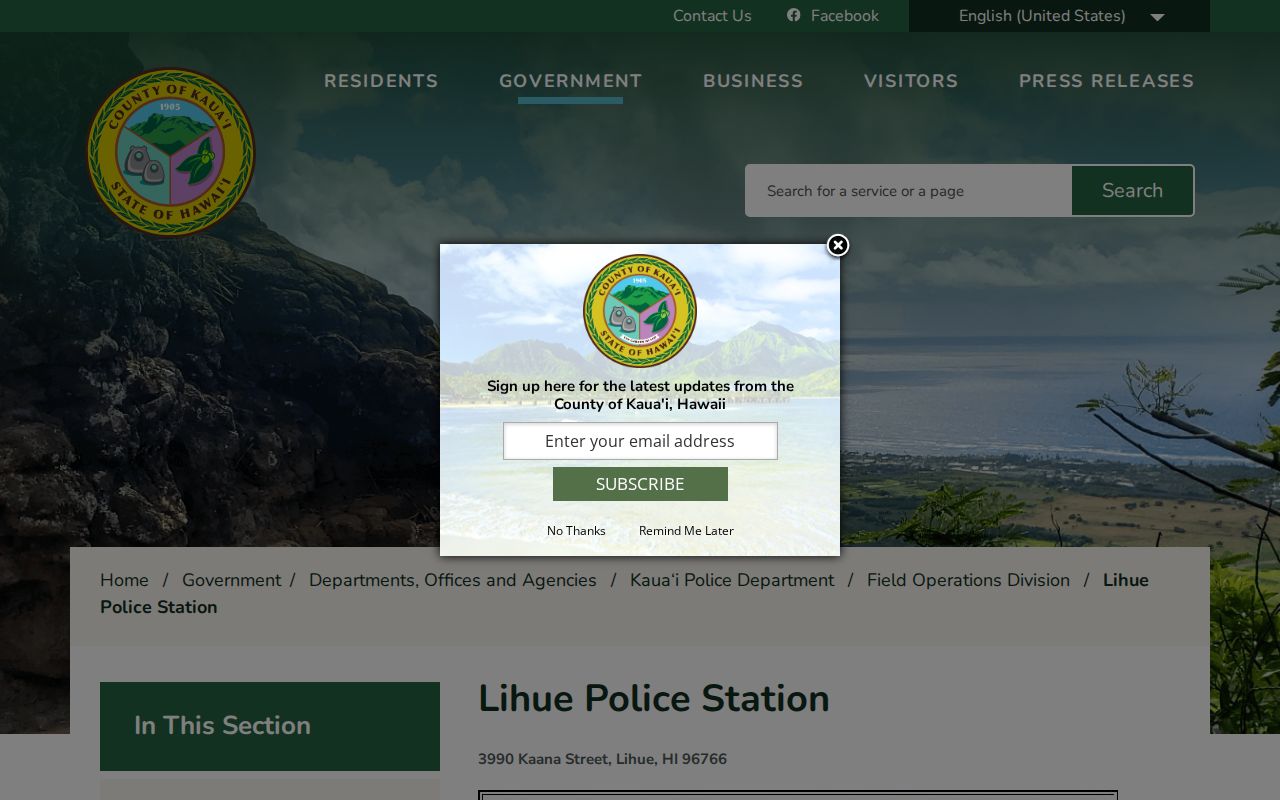
It places Līhuʻe police activity within one county department rather than a city agency.
Līhuʻe Report Request Details
KPD’s public request form asks for the requester’s full name, mailing address, phone, police report number, report type, incident date, and a driver’s license or state ID copy. When processing ends, staff schedule pickup at headquarters. A posted base fee was not found, so request a written cost estimate if the file is large or needs extensive review.
Hours can change. Research recorded temporary Records hours for July 6 through August 31, 2026: Monday and Wednesday 8 a.m. to 2 p.m., Tuesday and Thursday 8 a.m. to 4 p.m., and Friday 8 a.m. to noon, with a special August 14 training opening. Because those hours expire, call 808-241-1929 before visiting. Court counter hours are separately published as 8 a.m. to 4 p.m. weekdays except state holidays.
Booking and Arrest Records in Līhuʻe
KPD handles initial arrest processing and an islandwide holding function. A person held longer may be transferred to the state-run Kauaʻi Community Correctional Center on Kūhiō Highway. KCCC is a 128-bed jail and correctional facility for accused and convicted adults. It is not a county sheriff jail and does not replace the clerk’s docket.
KPD has no verified public booking log. Use SAVIN/VINE for custody status, then call KCCC if a record does not appear. Search the Fifth Circuit docket for filed charges and outcomes. Request the KPD report for the police narrative, subject to release rules. These channels also help explain why an arrest can appear in one system before another.
Note: An arrest record reports an event and allegation; only the court file can show the later case outcome.
Why Līhuʻe KCCC Is Different
KCCC at 3-5351 Kūhiō Highway records custody, transfer, visitation, and facility status. The Fifth Circuit clerk at 3970 Kaʻana Street records charges, hearings, rulings, and disposition. Calling one for the other record wastes time and can yield a partial answer.
Use KCCC or SAVIN/VINE when the question is where someone is held now. Use eCourt Kōkua or the court counter when the question is what the State charged or how the judge ruled. Use KPD when the question concerns the incident narrative. The countywide court case lookup gives more detail on docket fields and older-record fallbacks.
The Līhuʻe Municipal Court File
No Līhuʻe municipal docket exists. Hawaiʻi has no municipal government below the county level, and the state Judiciary supplies the trial courts. District Court of the Fifth Circuit hears misdemeanors, petty misdemeanors, traffic matters, and preliminary proceedings. Circuit Court handles felonies and other serious criminal matters.
| Court name | District and Circuit Courts of the Fifth Circuit |
|---|---|
| Location | Puʻuhonua Kaulike, 3970 Kaʻana Street, Līhuʻe |
| Online lookup | eCourt Kōkua by party name or case ID |
| File content | Charges, status, parties, hearings, docket events, disposition, sentence entries, and eligible public documents |
| Copies | Free metadata; online documents cost $3 or 10 cents per page, whichever is greater |
District criminal cases before August 2012 and traffic cases before November 1995 require a courthouse or written-request fallback.
Līhuʻe Fifth Circuit Language Desk
Court language access is based at District Court, 3970 Kaʻana Street, Suite 210, with a published contact number of 808-482-2351. Official resources identify support for many Pacific and Asian languages, Spanish, Hawaiian, and sign language. A person needing an interpreter should contact court staff rather than a judge.
The Fifth Circuit language-services page is the official source.
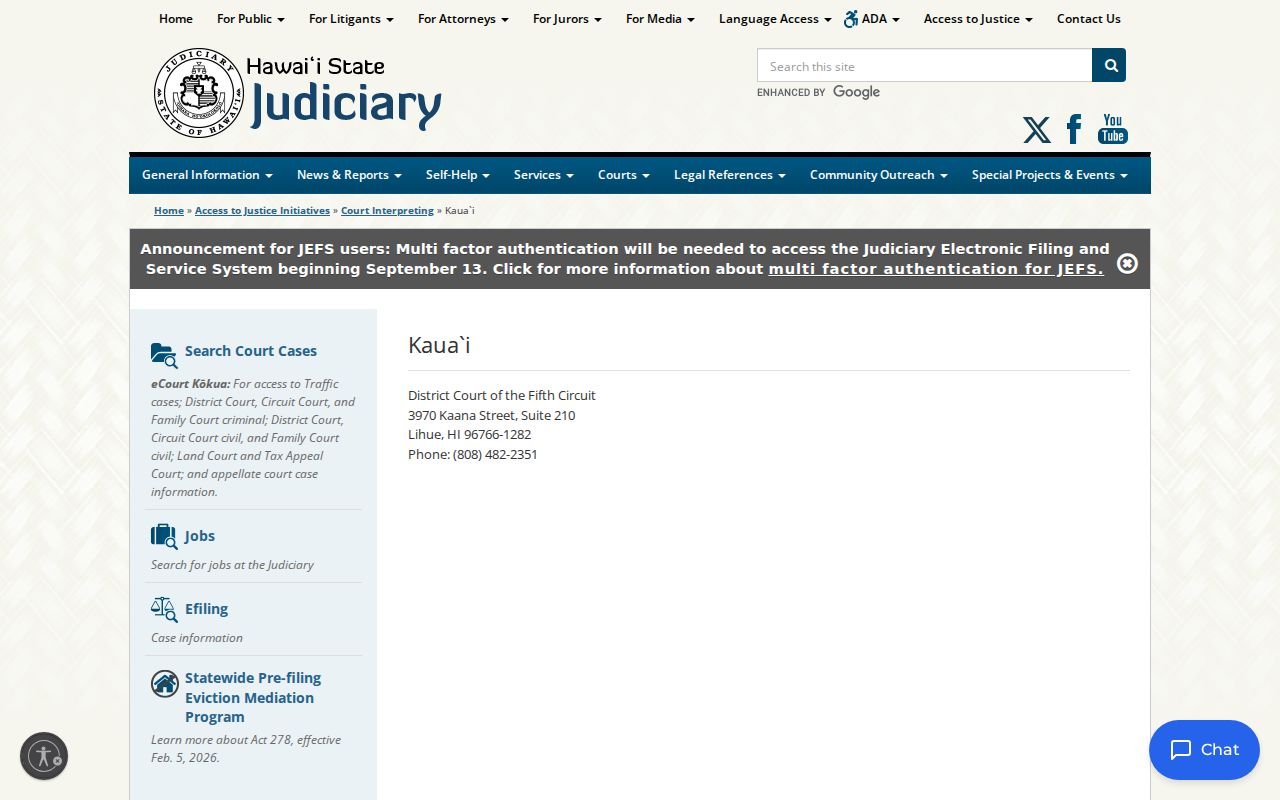
Language help supports access to proceedings and clerk services without changing which records are public.
How Līhuʻe Records Reach the County
Līhuʻe is a CDP and county seat, not a city government. A KPD arrest begins the source record. The Kauaʻi prosecutor decides what charges to file. The Fifth Circuit creates the court case, then criminal justice agencies send eligible dispositions to the Hawaiʻi Criminal Justice Data Center.
Record flow: Līhuʻe KPD response › Kauaʻi prosecutor › Fifth Circuit courts › HCJDC state repository.
The prosecutor’s official page identifies the office and its role.
The office sits beside KPD, but its charging file remains distinct from the police report and public court docket.
Līhuʻe Case Support Offices
A criminal record search may lead to a live case in which official assistance matters more than another database. The prosecutor’s Victim Witness Program explains notification, restitution, and SAVIN resources. The state Office of the Public Defender maintains a Kauaʻi office for eligible defendants. Neither office is the public court clerk.
The official victim and witness resources show how a case moves after filing.
The flow material helps a reader place notices and hearings in the court timeline.
The Kauaʻi Public Defender office is the official defense resource.
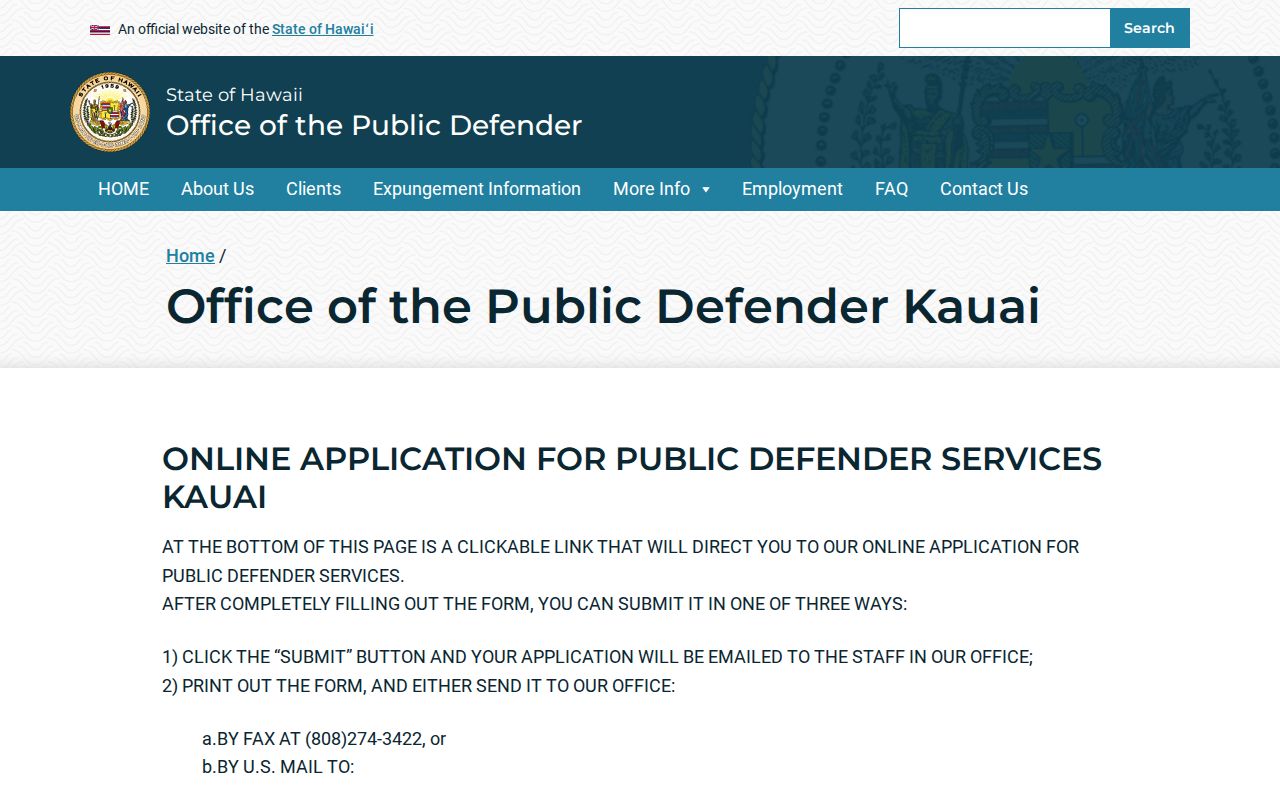
Its role concerns representation, not public record certification or police-report release.
Līhuʻe Fingerprint Record Review
KPD offers public fingerprinting by appointment at 3990 Kaʻana Street. Call 808-241-1929. The fingerprints can support HCJDC Access & Review, the best state route for checking your own identity-linked record. Fingerprints reduce uncertainty from common names, spelling variants, and aliases.
Public eCrim is narrower. It returns Hawaiʻi adult public conviction information, not federal or out-of-state records, juvenile matters unless transferred to adult court, ordinary dismissed arrests, or pending arrests. Current research lists a $12 online printed result, a $25 public-access-site printout, and different HCJDC staff or fingerprint fees. Verify the exact service and price before payment.
A person reviewing a Līhuʻe record should compare the HCJDC arrest cycle with the Fifth Circuit disposition. A court may show an amended charge before that update reaches the repository. An alias can also split a name result. HCJDC provides a challenge route when Access & Review reveals incomplete or inaccurate identity-linked information. Preserve the response, court case ID, and any corrected disposition used to support that request.
Līhuʻe Record Access Rules
UIPA governs KPD agency-record requests. Its disclosure duty does not erase privacy, active-investigation, or legitimate government-function exceptions. Hawaiʻi Court Records Rules separately protect sealed, confidential, and juvenile matters. HCJDC dissemination rules make public conviction information available while keeping pending and ordinary non-conviction arrest data confidential to general users.
Key statutes:
HRS chapter 92F is Hawaiʻi’s Uniform Information Practices Act.
HRS §831-3.2 authorizes expungement of qualifying arrest information.
HRS chapter 846E governs covered-offender registration and public data.
Ask KPD for segregable public parts and a written legal basis for withheld material. Court sealing and HCJDC expungement are separate processes.
Līhuʻe Requests Need Exact Keys
A precise request is easier to review. Identify the Līhuʻe incident, case or date range, name the office believed to hold it, state the preferred format, and set a cost cap. If part is withheld, ask for a written explanation and the cited legal basis. Also ask the agency to release any reasonably segregable portion that can be separated from protected facts.
OIP guidance and its opinion process are the next official layer when the response leaves a UIPA issue unresolved. Use the case ID at the clerk and the report number at KPD. Keeping those keys separate helps each Līhuʻe custodian find the right record without a broad and costly search.