
Arrest Records in Kauaʻi County
KPD is the single county police department for Kauaʻi and Niʻihau. Its Field Operations Division works through Kawaihau, Līhuʻe, and Waimea patrol districts, along with dispatch, traffic safety, and a detention or holding function. There are no separate city police departments. Officers create an incident number, record alleged offenses and circumstances, process identity and fingerprints, inventory property, and follow the lawful release, citation, or transfer path.
An arrest record documents police custody and allegations. It is not a finding of guilt. A later court case may contain amended or dismissed charges, and some arrests never result in a filed case. A statewide public conviction result is narrower still because ordinary pending and non-conviction arrest information is confidential in Hawaiʻi.
Kauaʻi County Arrest Custody Paths
A recent arrest can involve two custodians. KPD may hold someone briefly in its cell block, while longer local detention ordinarily occurs at the state-run Kauaʻi Community Correctional Center. KCCC is a Hawaiʻi Department of Corrections and Rehabilitation facility with jail and correctional roles, not a county sheriff jail. Its published capacity is 128 beds.
The official KPD Field Operations page describes the islandwide patrol and detention structure.
The structure explains why the arresting district, records counter, temporary cell block, and later custody location may all differ.
Kauaʻi County Arrest Lookups
No single official Kauaʻi County arrest database combines police reports, current custody, filed charges, and dispositions. Start with the source closest to the question. Use direct phone channels for immediate custody, written KPD requests for the police report, eCourt Kōkua for filed charges, and HCJDC Access & Review when checking your own fingerprint-linked statewide record.
- Search Hawaiʻi SAVIN/VINE and call KCCC or KPD detention lines when current custody is the concern.
- Ask KPD Records for the report using the report number, incident date and type, requester contact, and identification.
- Search eCourt Kōkua by name with the Fifth Circuit filter, allowing for filing lag.
- Use HCJDC fingerprint Access & Review for the strongest identity-based check of your own Hawaiʻi record.
- When a public report is needed, make a focused UIPA request and ask for segregable, nonexempt portions.
Kauaʻi County Arrest Report Requests
KPD says most police reports become available after the investigation is complete and the case closes. Requests are not instant. Staff review the file for about 48 hours, black out protected personal information, and arrange pickup by appointment. Supply the report number, incident date and type, contact details, and identification. If the investigation remains active, KPD may withhold material or release only portions.
The KPD Records Section page is the official request channel.
The image points to the records process, not a live arrest roster. KPD Records is at 3990 Kaʻana Street, Suite 200, Līhuʻe, and its clerk line is 808-241-1929.
A public request under Hawaiʻi’s Uniform Information Practices Act should name the incident, date range, office, and desired format. Set a cost ceiling if copying or review fees are a concern. When KPD withholds part of a report, ask for the written legal basis and for any reasonably segregable portion that can be released after redaction. HRS §92F-13 recognizes privacy and law-enforcement limits, while HRS §92F-21 addresses an individual’s access to a personal record. Those routes are related but not identical. The Office of Information Practices offers guidance, and its F22-01 opinion concerning KPD shows why an investigation’s status can affect access.
Arrest Records: What They Contain
A KPD arrest record may connect an incident number to the arrest date, alleged offense, arresting unit, identifiers, fingerprints, warrant or citation information, property inventory, and initial release or transfer. The precise public version depends on the file and applicable privacy limits. SAVIN/VINE provides custody status, not a complete booking sheet, so do not assume that mugshot, full bond data, judge, court date, or every charge will appear.
| Report or Booking Number | Connects the police or custody event to its custodian. |
|---|---|
| Booking Date & Time | Shows processing time when present, not the final case result. |
| Arresting Agency | Usually KPD locally, though other lawful agencies may act. |
| Charges | Initial allegations that prosecutors may decline or amend. |
| Bond or Release | May show an initial status; later court orders control. |
| Booking Photo | No official public KPD/KCCC profile with a guaranteed mugshot field was verified. |
| Custody Status | May show hold, transfer, release, or current facility information. |
Kauaʻi County Arrest Custody Search
DCR directs public inmate-location questions to Hawaiʻi SAVIN/VINE. Select Hawaiʻi, then search with a legal first and last name or an offender ID. A result may show the person’s name, custody status, location or custodial agency, offender ID, and notification choices. It is not a complete arrest history.
The source provides a statewide custody path when Kauaʻi has no county jail roster. No match does not prove release or show that no arrest occurred. Call KCCC and KPD when spelling, transfer lag, or short-term holding may explain the gap.
Recent Kauaʻi County Bookings
KPD does not publish an official live recent-arrest blotter identified in the research. DCR also does not provide a Kauaʻi sheriff-style roster. The safe fallback is SAVIN/VINE for custody, KPD direct lines for immediate status, the Records Section for a releasable report, and eCourt Kōkua for charges actually filed. Private mugshot galleries are not official substitutes.
KPD annual reports have published aggregate history, including 2,488 adult “green box” bookings and 3,791 adult arrest charges in 2015. Those dated totals are not a current rate, a name roster, or evidence about any person. A current-custody search can also lose an entry after release, so absence from a roster proves little about older arrest history.
Kauaʻi County Arrest Contact Lines
Use the phone number tied to the present need. KPD Dispatch at 808-241-1711 handles non-emergency law-enforcement guidance. The Cell Block line is 808-241-1632, and the Intake or Detention Sergeant is 808-241-1637. KCCC can be reached at 808-241-3050 when a transfer to state custody may have occurred. KPD Records at 808-241-1929 handles report access, not emergency location.
The official KPD direct-line directory keeps these roles separate.
Calling the right unit reduces delay. Never send money in response to a warrant caller. KPD warned in February 2026 that it does not collect warrant payments by phone or demand cryptocurrency or prepaid cards.
Kauaʻi County Arrest Record Custodians
KPD’s Support Services Bureau includes records clerks, a records supervisor, report reviewer, analyst, evidence custodian, and police warrants clerk. The official bureau description confirms that these related functions do not all produce the same public record.
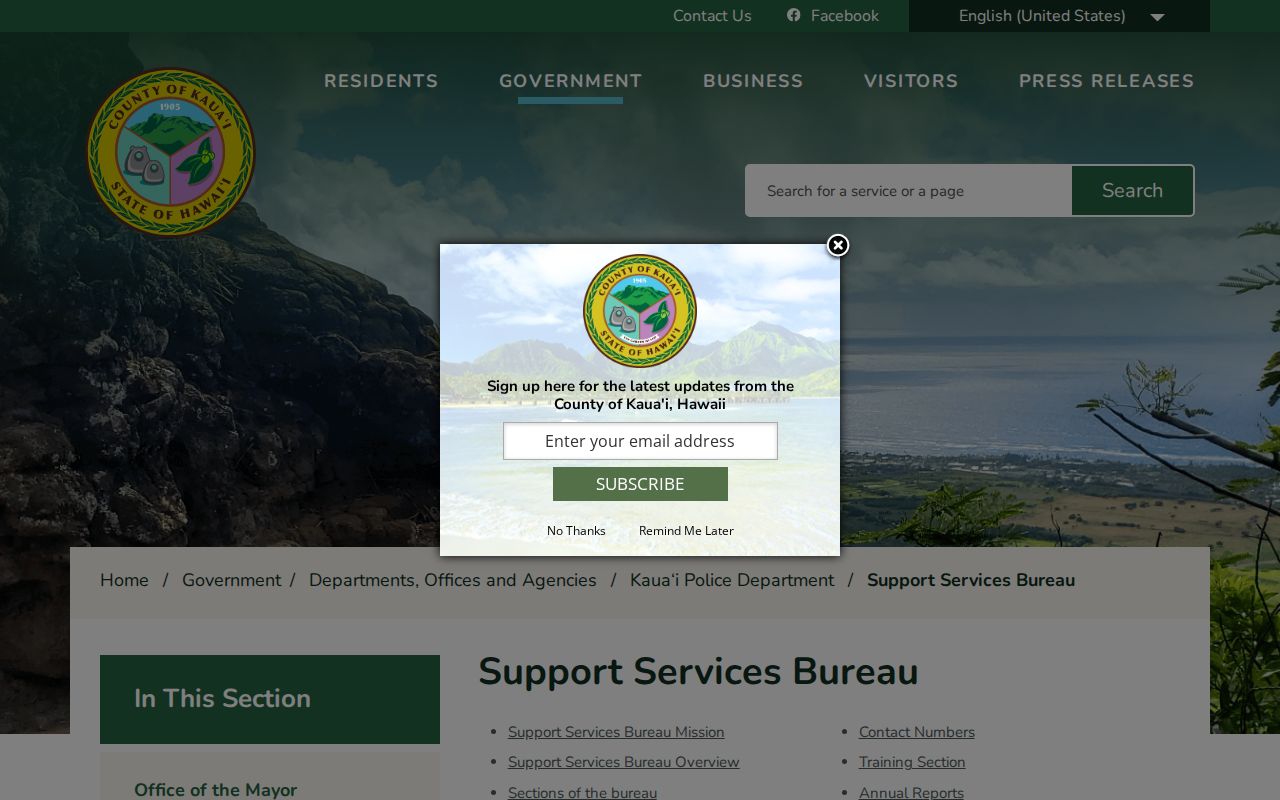
Three patrol districts feed reports to one central Records Section in Līhuʻe. Ask for the exact report or function instead of requesting a vague “background check,” which KPD directs to HCJDC.
For longer custody, the KCCC facility page identifies the state facility and its services.
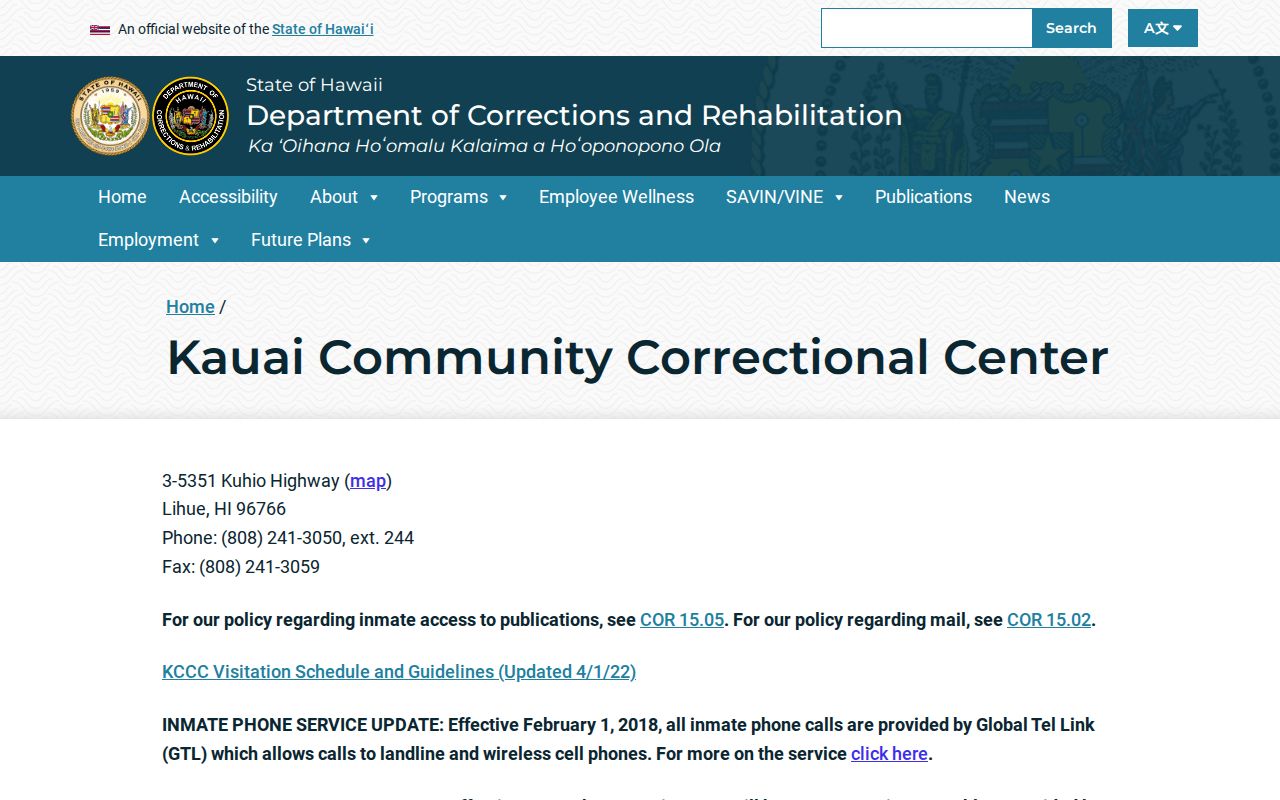
KCCC’s role can include pretrial detention or correctional custody. Its farm and Lifetime Stand programs describe facility context, but participation or location alone does not state a court disposition.
The record chain continues after custody. Prosecutors decide whether allegations become charges, District or Circuit Court creates a case file, and agencies report qualifying dispositions to HCJDC. Reporting lag can leave the police report, custody result, docket, and repository summary out of sync for a time. Match report and case identifiers where possible rather than relying on a shared name.
Arrest Records vs Conviction Records
KPD creates the arrest record, the Judiciary resolves filed charges, and HCJDC compiles reportable state criminal-history events. Public eCrim includes Hawaiʻi adult conviction information and the special chapter 704 acquittal or dismissal outcomes described by HCJDC. Ordinary pending and non-conviction arrests remain confidential to the general public. An eCrim printout is therefore neither the KPD narrative nor the complete court docket.
| Arrest Record | Conviction Record |
|---|---|
| KPD or another arresting agency creates it. | The Judiciary enters judgment and reports the outcome. |
| Shows an arrest or booking event and allegations. | Shows a finding of guilt and its disposition. |
| Lives with KPD, holding, or custody systems. | Lives in the court file and reportable HCJDC history. |
| May end in release, no charge, dismissal, or acquittal. | May lead to sentence, appeal, later expungement issues, or sealing. |
Note: An arrest is not proof of guilt. Confirm filed charges and the latest court disposition before drawing any conclusion.
If your own record appears incomplete, a fingerprint-based HCJDC Access & Review is stronger than a public name match. It can support a correction request because fingerprints tie the arrest cycle to identity. For a qualifying non-conviction, HRS §831-3.2 expungement and a separate Judiciary sealing request may both be needed. Never assume that clearing one system automatically changes every related record.
Reconcile dates and identifiers before asking an office to correct anything. KPD may retain the event under an incident number while the Judiciary assigns a later case ID, and the filed charge may differ from the officer’s initial allegation after prosecutorial review. A release from custody can also occur before the case appears online. Save the report number, search permitted name variants, and compare the newest docket disposition with the HCJDC entry. If the sources still conflict, direct the question to the custodian of the disputed field instead of asking one agency to rewrite another agency’s record.