
Kapaʻa Criminal History Checks
Begin with the event, not with a broad name search. Kapaʻa police reports, court cases, custody notices, and conviction summaries are separate records. Each can show a different stage of the same matter. The following order covers every official access route documented for the community.
- For a new incident, contact KPD Dispatch at 808-241-1711, or call 911 for an emergency. Keep the report number.
- Request a KPD report through the Records Request for Non-Businesses. Provide the report number, date and type of incident, contact details, and identification.
- Search eCourt Kōkua by party name or case ID, using the Fifth Circuit context for Kauaʻi.
- For current custody, use Hawaiʻi SAVIN/VINE or call Kauaʻi Community Correctional Center at 808-241-3050.
- Use eCrim for public Hawaiʻi adult conviction information, or fingerprint-based HCJDC Access & Review for your own identity-linked state record.
A missing result at one step does not prove there is no record. A recent report may not yet be a filed case, and eCrim excludes pending and ordinary non-conviction arrests.
Kapaʻa Kawaihau Police Coverage
Kapaʻa sits mainly in KPD’s Kawaihau District. The official district profile lists the Kapaʻa Substation at 4670 Kahau Street and a district commander line of 808-246-8104. Dispatch remains the right point for an incident response. The district has four beats running from Kapaʻa through north and east Kauaʻi.
The profile describes 27 officers, three sergeants, a lieutenant, and a senior clerk when fully staffed. That local presence does not create a separate Kapaʻa Police Department. All officers work for the countywide KPD, and central Records in Līhuʻe controls public report copies.
The official Kawaihau District source shows the local substation and its wide service area.
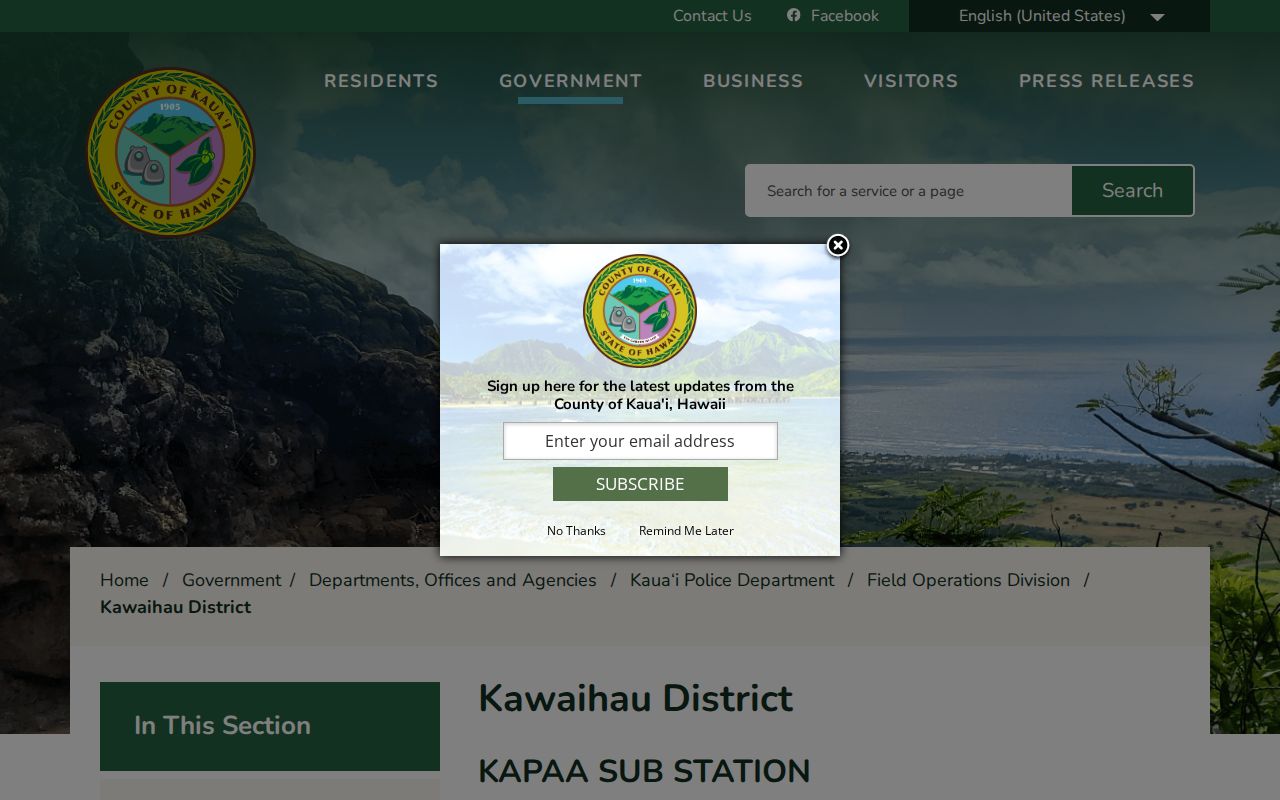
The image helps distinguish a patrol base in Kapaʻa from the central records counter that processes requests.
Records at the Kapaʻa Police Department
There is no independent Kapaʻa police records unit. KPD Records at 3990 Kaʻana Street, Suite 200, Līhuʻe, reviews and releases KPD-created reports under Hawaiʻi law. Staff ask requesters to allow 48 hours for a response because the file must be checked for confidential information. Reports are generally released after investigative work is complete and the case is closed.
The form asks for a full name, mailing address, phone, report number, report type, incident date, and a copy of a driver’s license or state ID. When a copy is ready, staff arrange pickup. Call 808-241-1929 or use kpdinsurance@kauai.gov for status. KPD has not posted a base copy fee, so ask for a written estimate before approving costly work.
Note: The Kapaʻa substation can serve a police response, but central KPD Records is the public copy counter.
Why Kapaʻa Reports Travel
A report made along Kūhiō Highway or in a Kapaʻa neighborhood starts with the responding KPD officer. The report number is the best key for the next step. Central Records can then locate the file even though the response came from a Kawaihau beat. That split is common in a countywide police system.
Privacy and case status affect what comes back. KPD says it redacts names, home addresses, dates of birth, phone numbers, Social Security numbers, and other protected details when disclosure would invade privacy. An open investigation may justify withholding more. A requester may also use a formal UIPA request and ask for segregable, nonexempt parts plus the legal basis for any denial.
Booking and Arrest Records in Kapaʻa
Kapaʻa has no community jail roster. After an arrest, KPD may use its islandwide holding or cell-block function before a transfer to the state-run Kauaʻi Community Correctional Center. KCCC, at 3-5351 Kūhiō Highway in Līhuʻe, holds both accused and convicted adults. The facility is not a court clerk and does not supply the court case file.
For a custody check, start with Hawaiʻi SAVIN/VINE. If the person cannot be located, call KCCC at 808-241-3050 and then KPD Detention at 808-241-3050 as listed in the research contacts. Delays, releases, transfers, and spelling differences can explain a blank result. For more countywide arrest access detail, use the Kauaʻi County arrest search.
The DCR locator guidance explains why SAVIN/VINE is the public route.
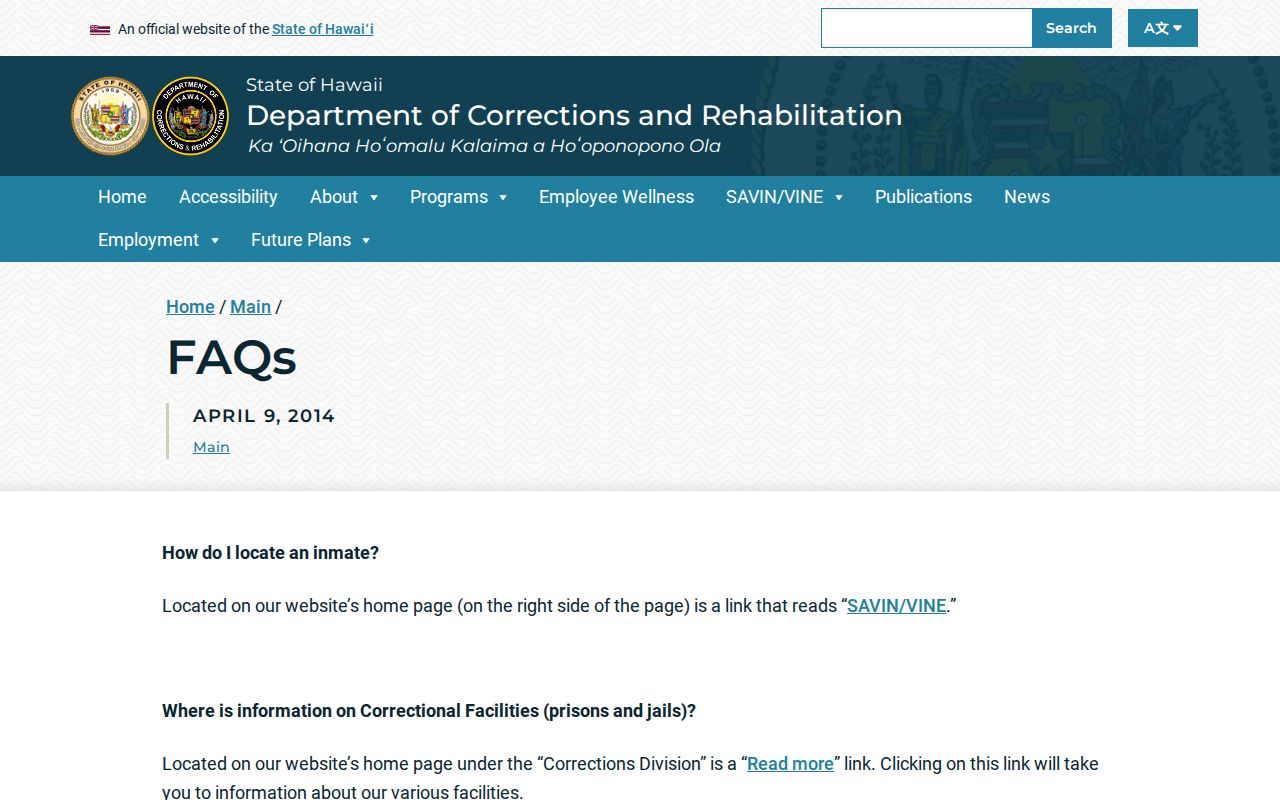
It confirms that a Kapaʻa custody question moves to a state corrections channel rather than a town booking page.
Kapaʻa Arrests Reach KCCC
The stages matter because each office records a different fact. KPD records the incident, arrest, fingerprints, and initial custody. KCCC records a transfer and later custody status. The prosecutor decides which charges to bring. The Fifth Circuit then opens a court file. None of those sources alone is a complete criminal history.
Custody flow: Kapaʻa KPD response › KPD holding › possible KCCC transfer › prosecutor review › Fifth Circuit case.
The DCR and KCCC directory supplies the official facility contact.
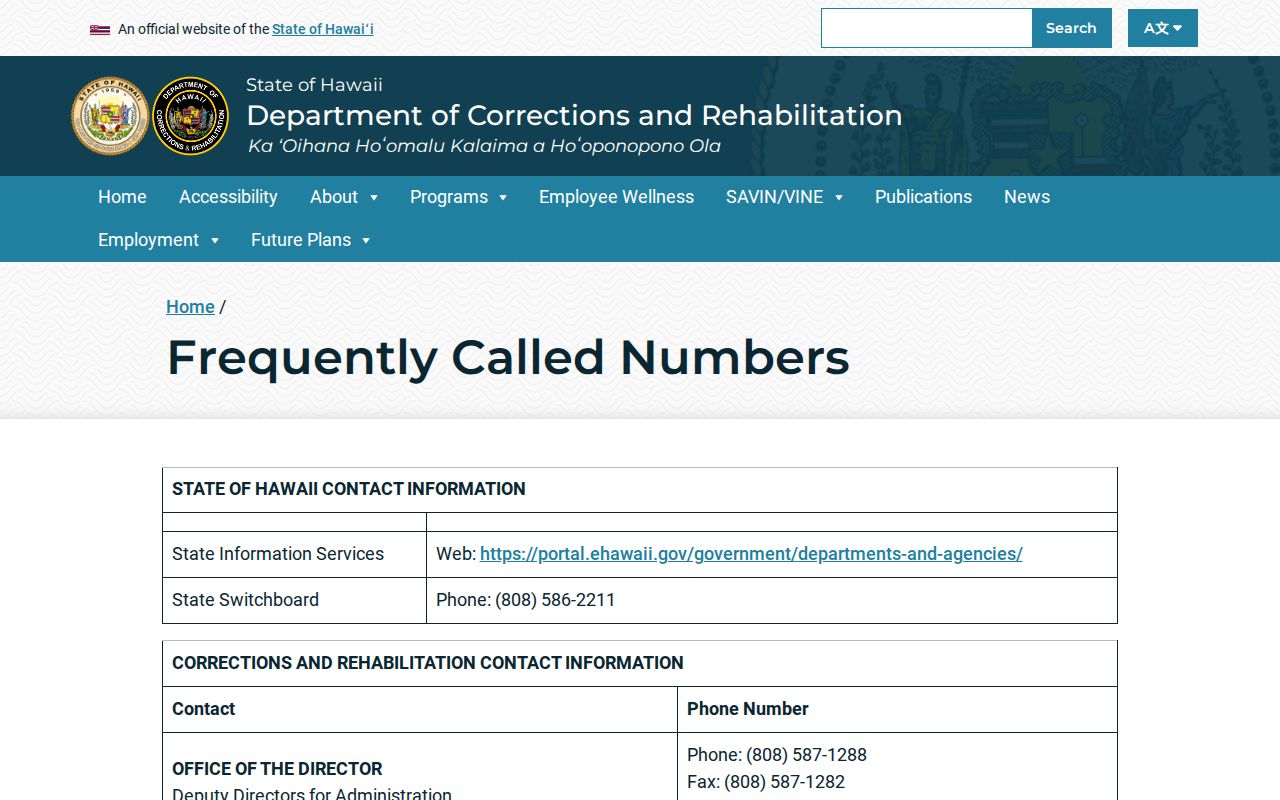
The directory is useful when an online custody search needs a direct official follow-up.
The Kapaʻa Municipal Court File
Kapaʻa has no municipal government and no municipal court. The required local-court inquiry therefore points to Hawaiʻi’s state Judiciary. District Court of the Fifth Circuit handles misdemeanors, petty misdemeanors, traffic matters, and authorized preliminary proceedings. Circuit Court of the Fifth Circuit handles felony trials and serious criminal matters. Both use the statewide eCourt Kōkua system.
| Court name | District and Circuit Courts of the Fifth Circuit at Puʻuhonua Kaulike |
|---|---|
| Local status | No Kapaʻa municipal court or separate town docket |
| Case lookup | eCourt Kōkua by party name or case ID; courthouse terminal or written request for older and offline material |
| What appears | Case ID, court, charges, status, parties, docket events, hearings, disposition, and eligible paid documents |
| Copies and fees | Free metadata; downloadable documents cost $3 or 10 cents per page, whichever is greater |
District criminal cases before August 2012 and traffic matters before November 1995 are not available in the portal. The counter at 3970 Kaʻana Street is the fallback.
Kapaʻa Reports Become Court Cases
A KPD report number and a Fifth Circuit case ID are not interchangeable. Police use the first to track the event and investigation. The Judiciary assigns the second only when a matter is filed in court. Searchers often lose the thread by entering a police number into a court field or by assuming every incident becomes a charge.
- Report number
- KPD’s identifier for the police incident and narrative.
- Case ID
- The Judiciary identifier for a filed Fifth Circuit matter.
- Disposition
- The recorded outcome of a charge, such as conviction or dismissal.
- PDF icon
- An eCourt marker showing that a public document may be bought online.
If a recent event is absent from court search, ask KPD about the report first. If a case is filed, use its case ID for later docket checks.
How Kapaʻa Records Reach the County
Kapaʻa is a community within Kauaʻi County, so records do not pass through a city government. KPD creates police and arrest material. The county prosecutor reviews charging. Hawaiʻi’s District or Circuit Court creates the case docket, and criminal justice agencies report eligible dispositions to HCJDC.
Record flow: Kapaʻa KPD call › Kauaʻi Police Department Records › Fifth Circuit courts › Hawaiʻi Criminal Justice Data Center.
The public eCrim result is a Hawaiʻi adult conviction summary. It is not the KPD narrative, a full docket, a live custody record, or a national file. A fingerprint-based Access & Review request is stronger for checking your own identity because it can connect aliases and common-name matches.
Kapaʻa Warrant Call Warning
A caller who claims that a Kapaʻa warrant can be cleared with cryptocurrency is not following an official court process. KPD’s 2026 warning says police do not collect warrant fines by phone and do not demand cryptocurrency payments. Do not rely on a caller ID display or a threat of immediate arrest.
The KPD warrant scam notice provides the agency’s direct warning.
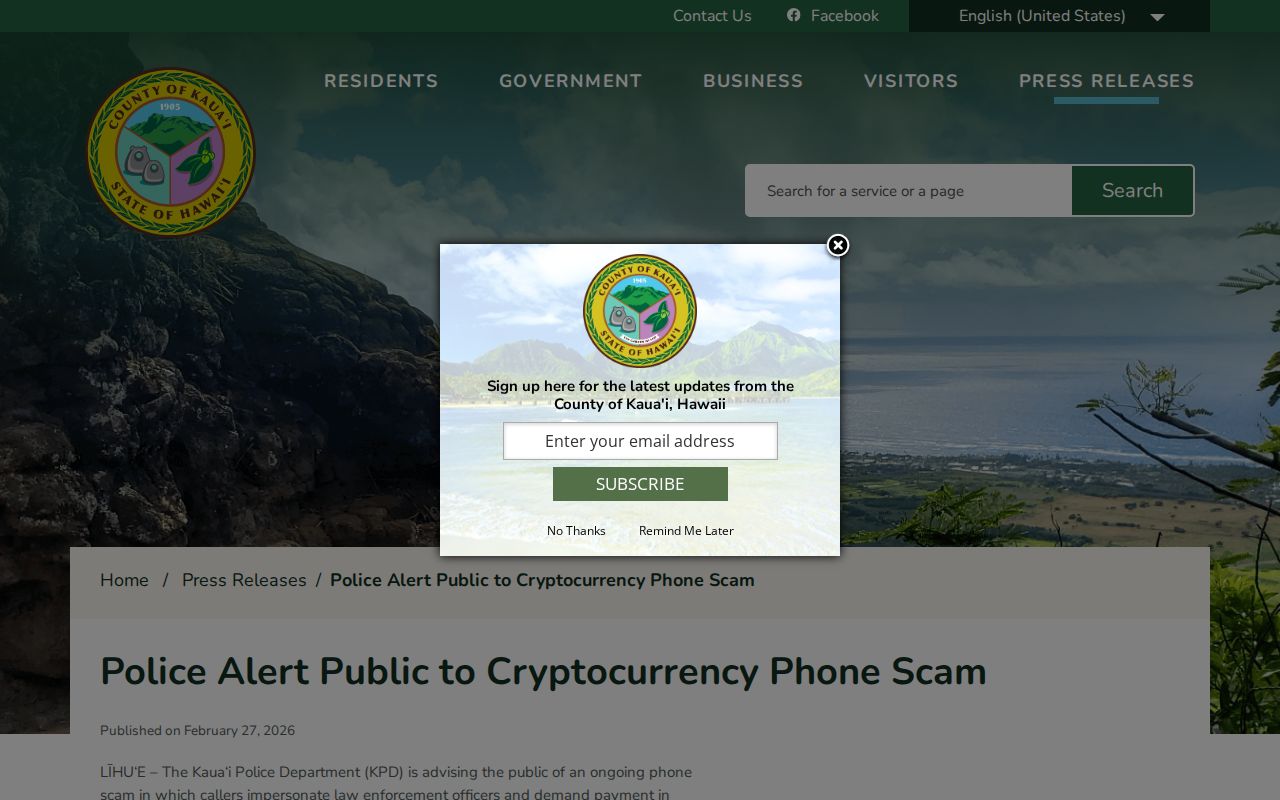
Verify a claimed warrant through the court clerk or KPD’s official published lines, never through payment directions supplied by the caller.
Kapaʻa Crime Numbers Need Context
Kapaʻa was the largest Kauaʻi Census place in 2020, with 11,652 residents. Yet KPD’s public traffic and enforcement totals are islandwide. They must not be relabeled as Kapaʻa crime counts. The Kawaihau District also spans many communities, beaches, trails, and a long north-east corridor, so even district figures would not equal a Kapaʻa-only measure.
For an exact incident, use the report number. For a specific filed case, use the party name and Fifth Circuit case ID. Those record-level searches answer a different question than broad trends and avoid attaching a countywide total to one community.
Kapaʻa Record Access Rules
Kapaʻa records follow state and county rules because the CDP has no municipal government. UIPA creates a disclosure duty but also permits withholding for privacy and legitimate law-enforcement needs. Court rules separately keep sealed, confidential, and juvenile cases out of eCourt Kōkua. HCJDC’s public product includes convictions and certain chapter 704 outcomes, while pending and ordinary non-conviction arrests remain confidential to the public.
Key statutes:
HRS chapter 92F, the UIPA governs agency-record requests and exceptions.
HRS §831-3.2 governs expungement of qualifying arrest information.
HRS chapter 846E governs public covered-offender information.
Ask for reasonably segregable public portions when a report contains protected material. Expunging eligible arrest data and sealing the related Judiciary case are separate steps.